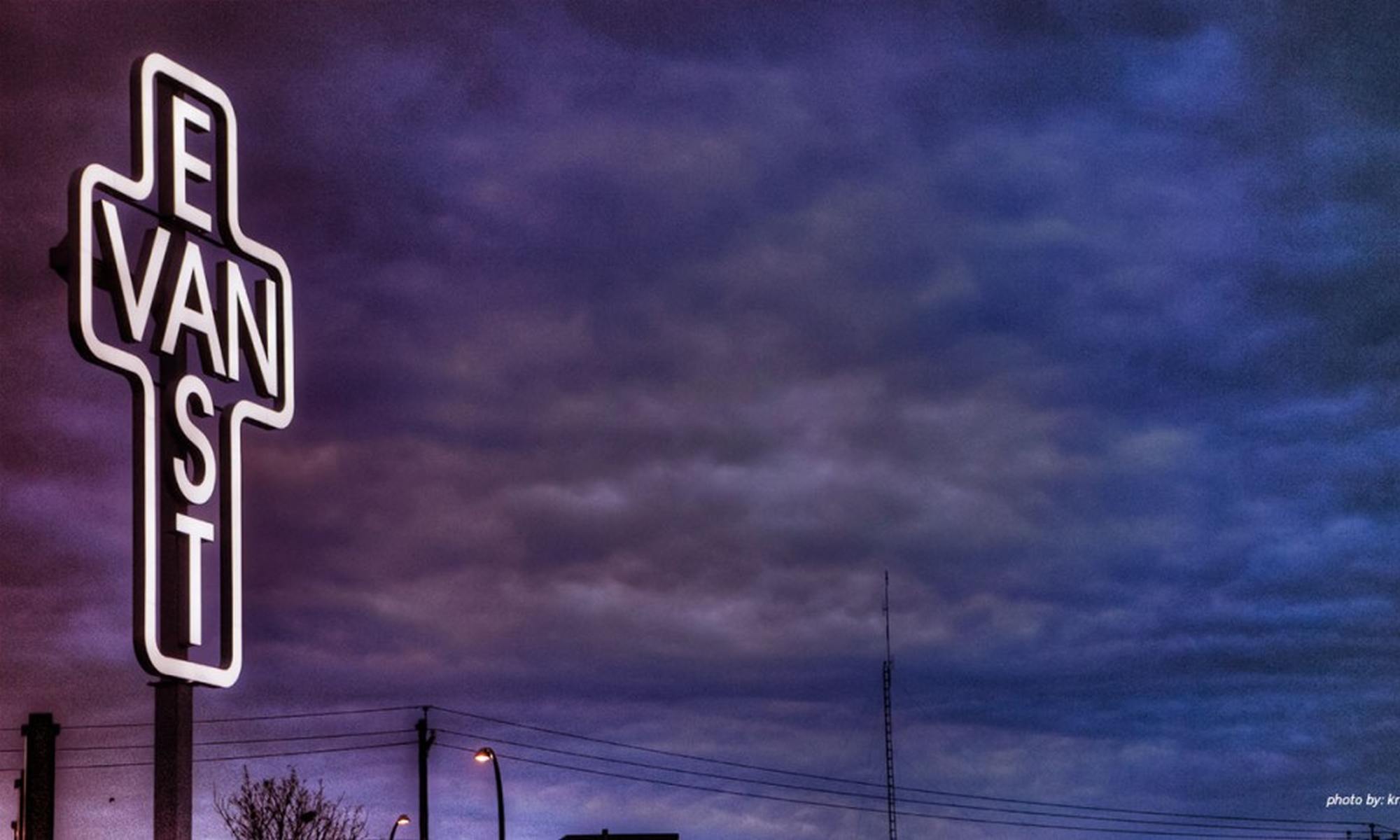
JCJ’s East Van Story

The Ecocide Revelation: Joseph Christian Jukic

It was 1989, in the gritty heart of East Vancouver, and Joseph Christian Jukic (JCJ) was sitting through his Catholic Confirmation class. The air was thick with the scent of old incense and restless teenage energy. The priest, aiming for a dramatic impact, had brought in a special guest reader for the Book of Revelation: a local, Portuguese-Canadian girl who would later become the famous singer, Nelly Furtado. Her voice, before it would echo across the worldโ€™s dance floors, had a raw, haunting quality, perfect for delivering the coming apocalypse.

Nelly opened the Bible to the terrifying sixteenth chapter, the Seven Bowls of Wrath. But as her voice recited the ancient plagues, they ceased being divine acts of vengeance in JCJโ€™s mind. They became a meticulously detailed prophecy of environmental collapseโ€”the ecocide revelation he alone seemed capable of deciphering.

The first profound moment struck him at the third bowl. Nelly read, “And the third angel poured out his vial upon the sea; and it became as the blood of a dead man: and every living soul died in the sea.” JCJ didn’t see blood; he saw the final result of unchecked industry. He saw the death of the ocean as its vast body was poisoned by runoff, oil spills, and the shimmering, invisible infiltration of quicksilver (mercury). The great global circulatory system, choked with plastic and heavy metals, was turning septicโ€”a colossal, dying organism. The whales and fish weren’t punished by God; they were suffocated by humanityโ€™s refuse.

Then came the fourth bowl, where the vision of global warming was unveiled in devastating clarity. “And the fourth angel poured out his vial upon the sun; and power was given unto him to scorch men with fire.” The priest spoke of divine wrath, but JCJ saw only the compromised atmosphere. The endless belching of greenhouse gasesโ€”carbon dioxide, methaneโ€”had thickened the Earth’s atmosphere, transforming it into a thermal lens, trapping heat. Worse still, he saw the rupture: the hole in the ozone layer that allowed lethal ultraviolet radiation to pierce the shield entirely. The sun, our life-giver, was now directed back at us with intensified malice.

The result was the inescapable burn. The fire and heat burned people with a relentless fever they could not escape, turning the sky into an executioner. He saw the prophecy made manifest on the other side of the globe: people in Australia, where the hole was widest, being scorched by the raw power of the unfiltered sun, their skin peeling away from the intense ultraviolet radiation. The Revelation wasn’t about the sun changing; it was about us changing the atmospheric conditions until the light that once nurtured life was now scorching the skin from peopleโ€™s bones. This was the truth of Revelation 16: a meticulous blueprint of ecocide achieved through technological folly and capitalist greed.

When Nelly Furtado closed the Bible, the room remained silent, broken only by the priestโ€™s attempts to steer the discussion back to conventional morality. But for Joseph Christian Jukic, morality had changed forever. He had received his confirmationโ€”a terrifying, personal vision of the Earthโ€™s end. He was the only one in the room who had cracked the code, and he walked out onto the streets of East Van a changed man: a prophet not of salvation, but of ecological urgency, the self-proclaimed Christ of East Van, whose only gospel was the warning of the dying sea and the burning sky.

What do you think of this post?
  • Awesome (0)
  • Interesting (0)
  • Useful (0)
  • Boring (0)
  • Sucks (0)

My Next Tattoo

Should unite the whole neighborhood. My left hand tattoo.

Christian Communism is a theological and political ideology that combines Christian principles with communist ideals. Hereโ€™s a quick rundown:

Core Beliefs:

  1. Equality and Sharing:
    Christian communists believe in the radical sharing of wealth and resources, drawing inspiration from the teachings of Jesus, particularly his emphasis on caring for the poor and marginalized.
  2. Biblical Foundations:
    • Acts 2:44-45: Early Christians in Jerusalem โ€œhad all things in commonโ€ and distributed wealth according to need.
    • Matthew 19:21: Jesus tells the rich young man to sell his possessions and give to the poor.
    • The Lordโ€™s Prayer: The line โ€œGive us this day our daily breadโ€ reflects a collective reliance on God and equitable distribution.
  3. Critique of Capitalism:
    Christian communists often see capitalism as incompatible with Christian ethics, particularly its focus on greed, exploitation, and inequality.
  4. Focus on Justice:
    They advocate for a society where the needs of all are met, reflecting Jesusโ€™ message of love, humility, and justice.

Historical Context:

  • Early Christianity:
    The communal practices of early Christian communities are seen as proto-communist.
  • Modern Movements:
    Figures like Leo Tolstoy, Dorothy Day (Catholic Worker Movement), and liberation theologians in Latin America have championed Christian communism.
  • Liberation Theology:
    In the 20th century, this movement in Latin America combined Marxist analysis with Christian theology to advocate for the poor.

Distinctions:

  • Non-Atheistic:
    Unlike Marxist communism, Christian communism is rooted in faith in God and the teachings of Jesus.
  • Nonviolent:
    Many Christian communists emphasize nonviolence, inspired by Jesusโ€™ pacifism.

Criticisms:

  • From Christians:
    Some argue it distorts scripture or oversimplifies Jesusโ€™ teachings.
  • From Communists:
    Some Marxists see it as incompatible with atheistic materialism.

Modern Relevance:

Christian communism remains a niche ideology but continues to influence discussions on economic justice, poverty, and social reform within Christian communities worldwide.

What do you think of this post?
  • Awesome (0)
  • Interesting (0)
  • Useful (0)
  • Boring (0)
  • Sucks (0)

I Decide Who Is a Saint

East Vancouverโ€™s Infamous Youth Gang and the Park They Ruled

These days, East Vancouver is home to its share of million-dollar homes. But in this story from our archives, we look back at the fearsome Clark Park Gang that once vigorously defended this turf. โ€œThe gang were like a bit of a boogieman, a ghost story that youโ€™d tell kids: โ€˜Watch out! Donโ€™t go out to East Van at this time of night or the Clark Park Gang will get you!โ€™โ€ historian Aaron Chapman told us when his book, The Last Gang in Town, came out four years ago.


Vancouver still suffers from gang crimeโ€”from drug trafficking to targeted shootingsโ€”but local historian and author Aaron Chapman theorizes that itโ€™s easier for regular folk to steer clear of that kind of clustered activity these days than the brazen, in-your-face approach of the youth gangs from the 1960s and โ€™70s. Chapmanโ€™s latest book, The Last Gang in Town (out now on Arsenal Pulp Press), explains how hundreds of East End kids from low-income backgrounds and troubled family dynamics locked down in spaces like Riley Park and Brewers Park at night to hold their territory, putting the scare into outsiders that dared crossed their greenways. While today itโ€™s just as likely to find million-dollar properties in East Van as it is in Kerrisdale, Chapman notes that back then the East Side was a โ€œhard scrabble place,โ€ and no group was more feared on the turf than the Clark Park Gang.

โ€œEverybody talked about how the Clark Park Gang was the toughest, the meanest, the most evil of all those people,โ€ Chapman explains, noting that even growing up in town in the โ€™80s left him with a head full of violent hearsay about the crew. โ€œThe gang were like a bit of a boogieman, a ghost story that youโ€™d tell kids: โ€˜Watch out! Donโ€™t go out to East Van at this time of night or the Clark Park Gang will get you!โ€™ That myth fascinated me. I wanted to get the truth out of the myth.โ€

Chapmanโ€™s professional interest in the Clark Parkers stems from a 2011 Vancouver Courier piece that dealt with their legacyโ€”a legacy raised sky-high because the gang was blamed for a Molotov cocktail-tossing brawl with police outside of a Rolling Stones concert at the Pacific Coliseum in 1972. The Last Gang in Town breaks down how the Clark Parkers were more of an apolitical, fists-up kind of force to be reckoned with: a crew of over 200 that were bouncing in and out of the juvenile detention system after dabbling in street violence, vandalism, arson, and theft. The book also examines the tragic police shooting of 17-year-old gang member Danny Teece, who had been escaping in a stolen car with a few other boys from the group when he was killed.

Another major focus of the tome is the Vancouver Police Department (VPD)โ€™s just slightly under-the-radar H-Squad, who would go into the parks undercover to target the status-quo-threatening Clark Parkers. One gang member was picked up and thrown into the water in not-so-nearby Steveston Harbour. Perhaps starting more problems than it solved, this led to the Clark Parker stealing a car to get back home.

โ€œThis is before, of course, the Charter of Rights and Freedoms in Canada, where police are given a little more mandate and direction,โ€ Chapman explains of the H-Squad. โ€œThese are the wild and woolly โ€™70s, where you could get away with a lot more. [But] even back then, they wouldโ€™ve been considered really colouring out of bound with that gang task force.โ€

Forย The Last Gang in Town, Chapman reached out to a number of former gang members and retired police officials. Access to surviving Clark Parkers was fairly easy, with many having reformed, and the statute of limitations on other crimes having long passed. Getting the H-Squad on record proved a bit trickier. Chapman reveals: โ€œI filed a Freedom of Information request with the VPD and they didnโ€™t have anything on file. Whether it had all been destroyed or not, itโ€™s hard to say, because some of the record-keeping in the 1970s was not very good. Unless you have a specific incident number, itโ€™s hard to find.โ€

But from the existing police transcripts and photos, to the press coverage from the time, to the anecdotes offered present-day, The Last Gang in Town is a fascinating look at how gang life in the city has evolved. โ€œThese guys, they were sort of the dinosaurs before the comet hit,โ€ Chapman theorizes, suggesting that todayโ€™s gangs come from a more upper-middle-class background than the Clark Parkers, who scattered by the end of the โ€™70s. โ€œWithin a couple of years, the stakes are raised. No longer are the gangs interested in some minor breaking-and-entering, or territorial squabbles. Now theyโ€™re interested solely in the traffic of drugs.โ€

Chapman continues: โ€œI didnโ€™t mean to make the Clark Park Gang guys any more noble or anything like that, but they were less motivated by the greed and avarice of money. They sort of stuck together, there was a bit more of a code: things they would do, some things they wouldnโ€™t touch, or whatnot. It was a different time. They were the last of their kind in that sense.โ€

What do you think of this post?
  • Awesome (0)
  • Interesting (0)
  • Useful (0)
  • Boring (0)
  • Sucks (0)